
August 5, 2026
The Hidden ROI of Going Digital (It's Not What Most Practices Expect)
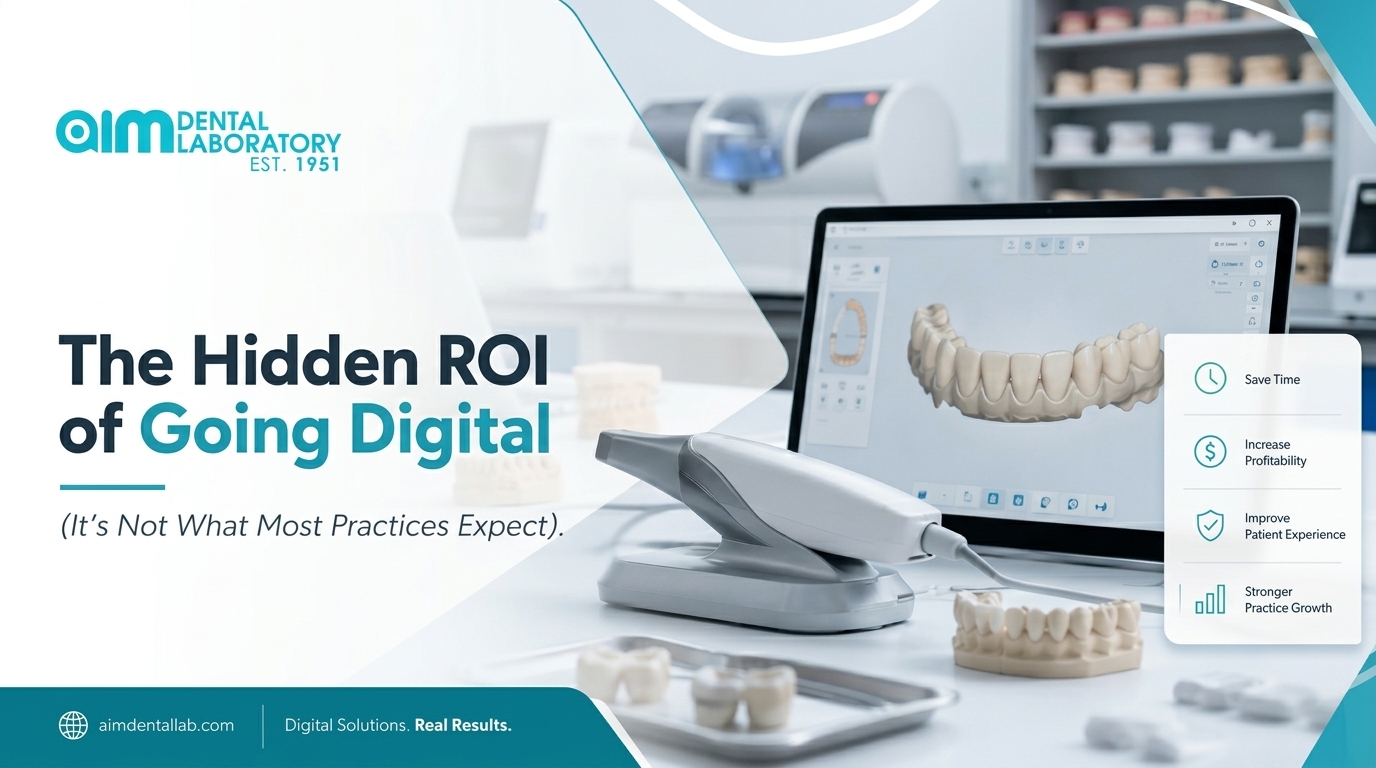
Ask a practice why they haven't gone digital yet, and the answer is almost always the same: the scanner costs too much to justify right now. It's a reasonable instinct — a five-figure piece of equipment is easy to see and easy to postpone.
What's harder to see is everything digital scanning replaces. And that's exactly why most ROI conversations about intraoral scanning start in the wrong place.
The comparison practices actually make
The typical mental math looks like this: scanner cost versus impression material cost. On that comparison alone, digital scanning can look like a slow payback — impression trays and PVS are cheap, and a scanner isn't.
But that comparison leaves out almost everything that actually costs a practice money.
What the comparison leaves out
A physical impression isn't just a material cost. It's a retake if the patient gags or the tray pulls short. It's a shipping delay if the box sits overnight before it reaches the lab. It's a distorted impression that doesn't get caught until the case comes back wrong — at which point you're not comparing scanner cost to tray cost anymore, you're comparing it to the cost of an entire remake.
Digital scanning doesn't just replace the tray. It replaces the retake, the shipping window, and a meaningful share of the distortion-driven remakes that never get attributed to the impression that caused them.
Where the real time goes
Chair time is the part of this equation practices underweight most. A physical impression that has to be retaken doesn't just cost the retake — it costs the schedule slot behind it, which pushes the rest of the day, which is the actual mechanism by which a five-minute problem becomes a forty-minute one.
A digital scan that comes back clean the first time doesn't just save that retake. It keeps the whole day on schedule, which is the kind of savings that never shows up on an equipment ROI spreadsheet but shows up very clearly in how a Tuesday afternoon actually goes.
The turnaround difference few people calculate
A physical impression has to physically travel before a lab can start work on it. A digital scan arrives the moment it's captured. For a single case, that's a day, maybe two. Across a practice's full case volume over a year, that's a meaningful amount of calendar time that was previously just transit — not diagnosis, not treatment, not anything productive, just a box in transit.
That compounds in a specific way: faster case starts mean more predictable delivery dates, which means fewer "where's my case" calls to the lab, which is its own quiet tax on practice staff time that digital scanning simply removes.
The actual ROI question
The right question isn't "what does a scanner cost compared to impression trays." It's "what is my practice currently spending — in chair time, in retakes, in remake-driven redos, in schedule disruption — because of a workflow that digital scanning would eliminate."
For most practices, that number is larger than the scanner's price tag, and it's already being spent. It's just spread across a hundred small delays instead of one visible line item, which is exactly why it's so easy to underestimate.
What to weigh before deciding
None of this means every practice needs to go digital tomorrow, or that capital cost isn't a legitimate constraint — it often is, especially for practices watching cash flow closely. But it does mean the decision deserves a fuller comparison than scanner price versus tray price. The more complete question is what a practice is already paying, in time and disruption, for staying analog — and whether that ongoing cost is actually smaller than the upfront one.
That's usually the harder number to see. It's also the one that matters most.
AIM Dental Laboratory's Scanner Placement Program was built around this exact gap — placing an intraoral scanner directly in a practice at no upfront cost, so the capital question no longer has to be the reason digital waits. See if your practice qualifies.
Enjoyed this?